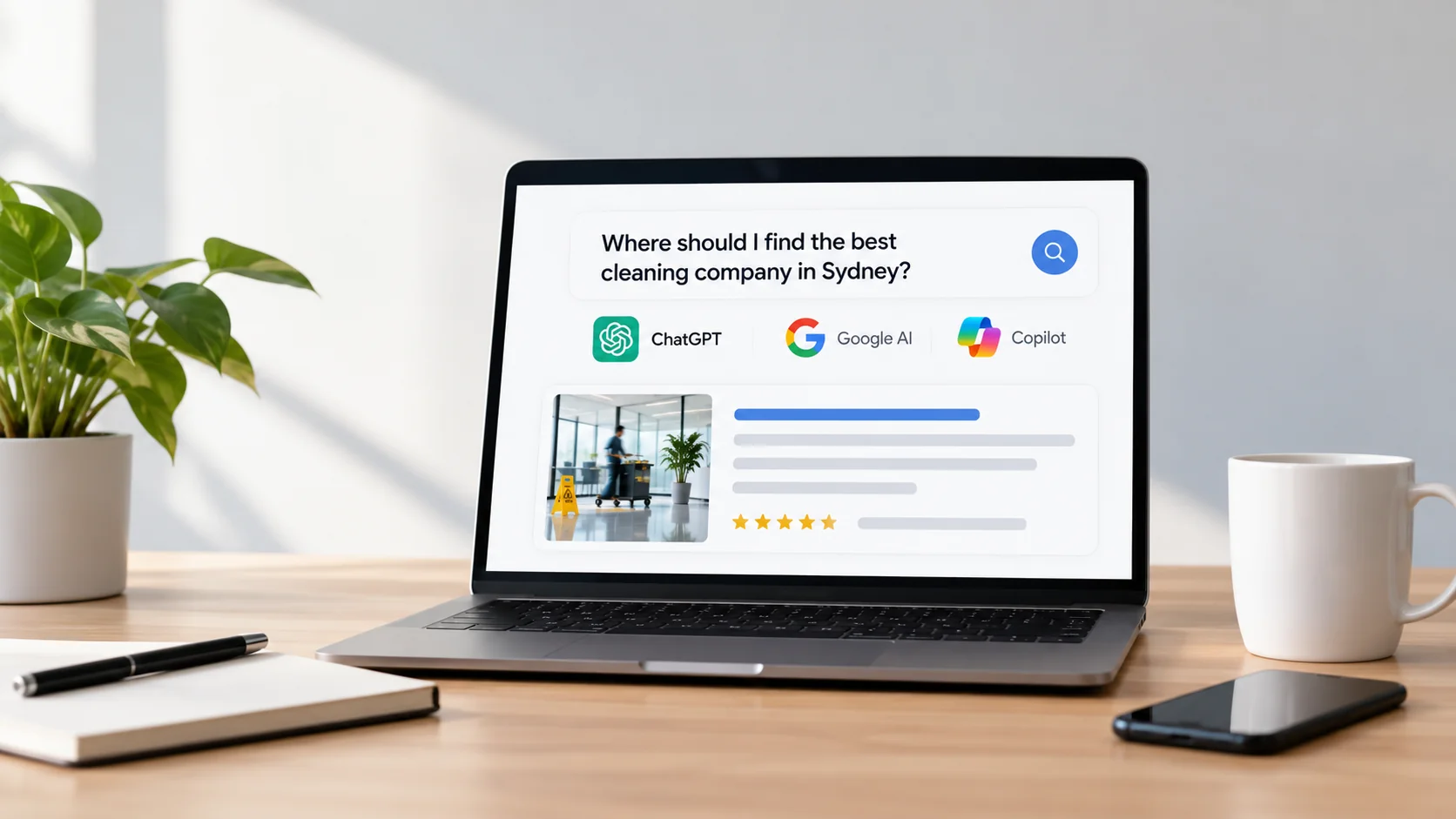
Can customers find your business when they search using ChatGPT, Google AI or Microsoft Copilot?
If your website clearly explains your services, locations, experience and business details, you’re already building an important foundation for AI search visibility.
But having a website isn’t enough. Search systems need to discover its pages, access useful information and determine whether that information is relevant to someone’s question.
AI search optimisation is the process of improving those foundations so your business has a better opportunity to appear in AI-assisted search experiences.
This guide covers seven practical checks Australian business owners can perform, along with free tools to measure their visibility.
1. Check Whether Search Engines Can Find Your Website
Before rewriting content or paying for an AI visibility tool, check whether your important pages are accessible.
A page that is blocked, unavailable or excluded from search indexes may never be considered as a source.
Start with Google Search Console
- Open Google Search Console.
- Select your verified website property.
- Open URL Inspection and enter your homepage URL.
- Check whether the page is indexed.
- Repeat for your important service pages.
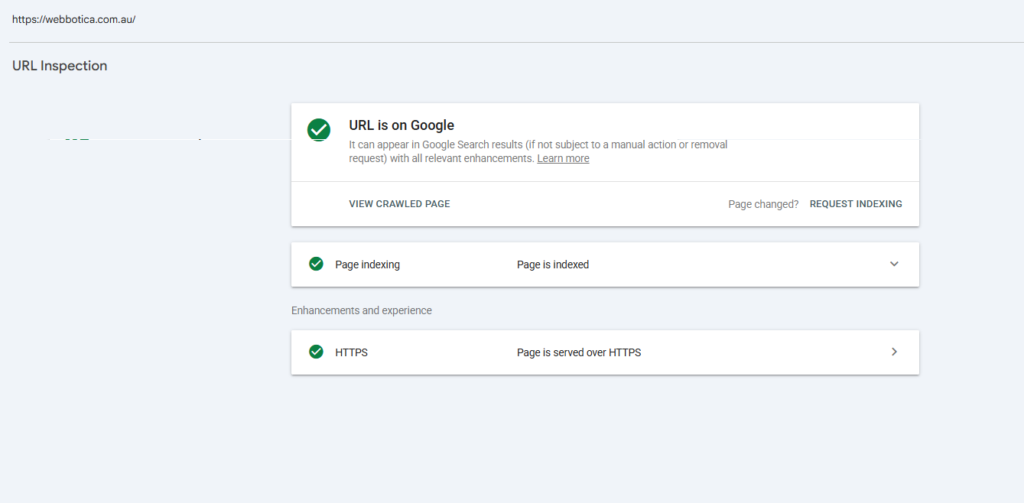
If a page isn’t indexed, examine the reason. Common problems include noindex settings, incorrect canonical URLs or crawling restrictions.
Also review your sitemap and ensure your live WordPress website isn’t set to discourage search engines.
For Google’s AI Overviews and AI Mode, there is an additional setting worth knowing about.
Google introduced Search generative AI controls in Search Console in 2026. Website owners can manage whether their property is included in supported generative AI search features.
Inclusion is the default, but it’s worth checking that you haven’t opted out accidentally.
See Google’s official generative AI controls.
What about ChatGPT?
OpenAI uses OAI-SearchBot to discover content for ChatGPT Search.
Ask your developer to review your site’s robots.txt and security settings to ensure this crawler isn’t being blocked unintentionally.
You can inspect your robots file by visiting:
https://yourwebsite.com.au/robots.txt
Not seeing OAI-SearchBot explicitly listed does not necessarily mean it is blocked. Robots rules, server settings and security services all need to be considered.
OpenAI distinguishes OAI-SearchBot, which supports search discovery, from GPTBot, which is associated with model training. Their controls are separate.
Read OpenAI’s crawler documentation.
The objective: Make your important pages accessible and eligible for discovery. This does not guarantee indexing or an AI citation.
2. Make It Immediately Clear What Your Business Does
Imagine someone searches:
“Who provides after-hours commercial cleaning around Liverpool, NSW?”
Now compare these two website descriptions.
Example A — Vague
We provide outstanding cleaning solutions with unmatched professionalism and customer satisfaction.
Example B — Specific
We provide commercial office cleaning in Liverpool, Prestons and surrounding Western Sydney suburbs. Services include scheduled office cleaning, kitchen and bathroom cleaning, floor maintenance and after-hours appointments, subject to availability.
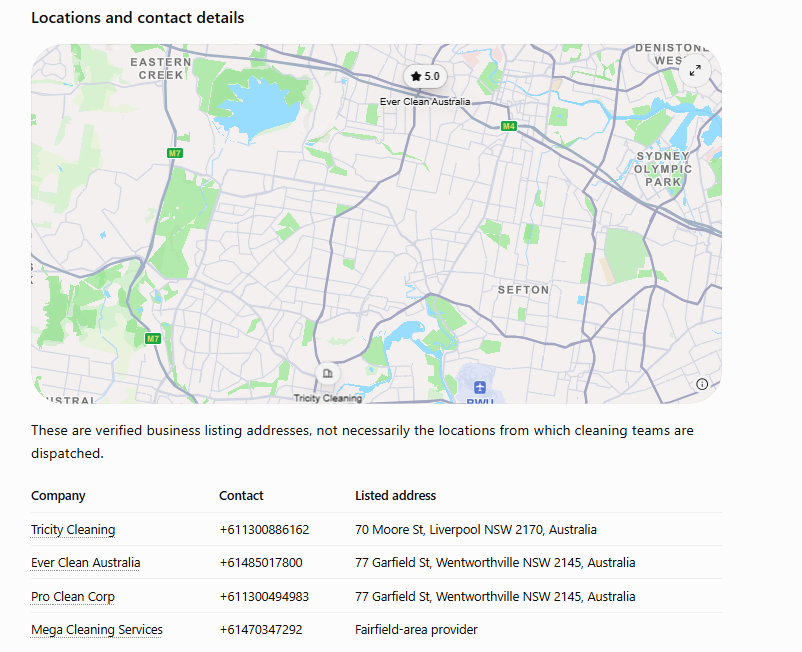
These are illustrative examples, not descriptions of a verified business.
The second description is more useful because it identifies the actual service, relevant locations, example inclusions and availability conditions.
It helps customers establish whether the company might suit their needs.
For your own business, review the first section of your homepage.
Can a new visitor identify what you do, who you help and where you operate without scrolling through several sections?
If not, rewrite that introduction before worrying about advanced AI optimisation.
Avoid adding services, locations or opening hours just to capture additional searches. Every detail must accurately describe what you offer.
3. Build Service Pages That Answer Real Customer Questions
A homepage should introduce your business. Individual service pages should help customers make decisions.
For example, a car detailing business might offer interior detailing, paint correction and ceramic coating.
Those services have different processes, costs and customer expectations.
A useful paint-correction page could explain:
- What paint correction actually does.
- Which types of paint defects may be improved.
- Why permanent scratches cannot always be removed.
- What affects the time and cost of the work.
- How customers can request an assessment.
This is more useful than repeating that the company offers “premium detailing at competitive prices”.
A practical service-page template
| Section | Information to provide |
|---|---|
| Service | Explain what the service is and who it suits |
| Scope | State what is included and excluded |
| Location | Identify genuine service areas |
| Process | Describe what happens before, during and after the service |
| Pricing | Provide prices or the factors affecting a quote |
| Evidence | Add genuine project photos, experience or reviews |
| Next step | Provide a clear contact or booking option |
You don’t need to force every service page into this exact structure. Include what genuinely helps the customer decide.
For a more detailed example, see Webbotica’s guide to writing service-business website content for AI search.
4. Publish Information That Competitors Can’t Easily Copy
Many business articles repeat the same advice.
“Choose an experienced provider.”
“Look for great customer service.”
“Compare prices before making a decision.”
These statements aren’t necessarily wrong, but they offer little original insight.
Google’s 2026 generative AI optimisation guidance specifically emphasises valuable, distinctive content based on experience and genuine knowledge.
For a local service business, that doesn’t require expensive research.
Consider a roofing contractor who publishes a guide comparing different roofing materials.
Instead of repeating manufacturer descriptions, they could explain which factors influence material selection in their actual projects, including roof pitch, weather exposure, maintenance and installation considerations.
They could also include original project photos and describe why a particular option was suitable.
A professional detailer might explain the results and limitations of a real paint-correction job, supported by genuine photographs.
A cleaning company could explain why two similar offices require different cleaning schedules.
These insights help readers understand the service while demonstrating actual experience.
A useful test: Before publishing a page, ask what someone would learn from it that they wouldn’t get from a generic description.
If the answer is nothing, improve the content before publishing.
5. Keep Your Business Information Accurate Across the Web
For local service businesses, customers need to know where you operate, how to contact you and whether your business is legitimate.
Your Google Business Profile, website and other public business information should be accurate and consistent.
Review your:
- Business name and contact details.
- Primary services and business category.
- Opening hours and availability.
- Service areas or physical location.
- Customer reviews and genuine work photographs.
Google explains that its traditional local search rankings are primarily influenced by relevance, distance and prominence.
A complete, accurate Google Business Profile supports your local presence in Google Search and Maps. However, it should not be presented as a guaranteed ranking factor across every AI platform.
If you travel to customers rather than serving them at a public storefront, configure your Google Business Profile appropriately.
Do not create fake business addresses or additional listings simply to target more suburbs.
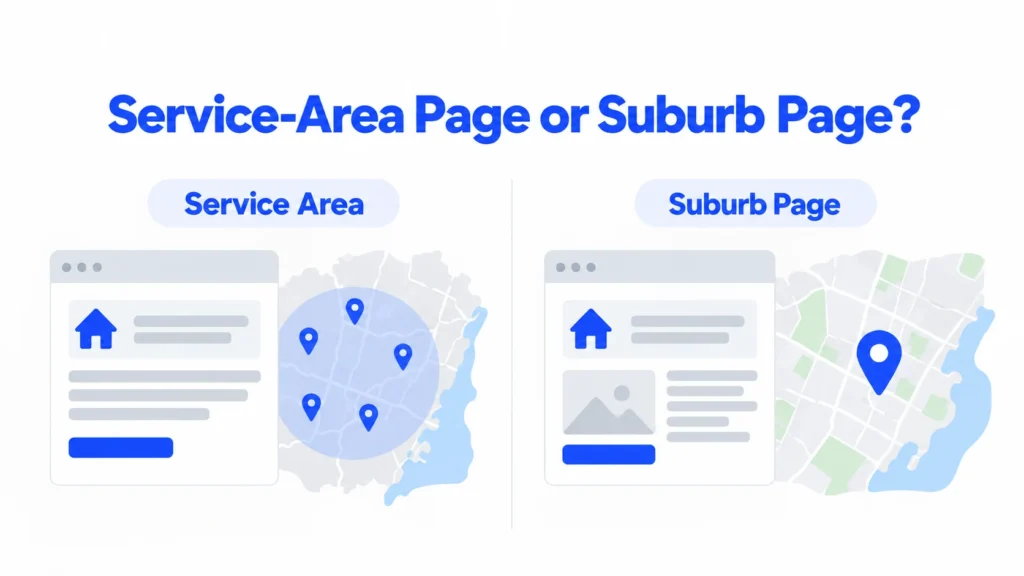
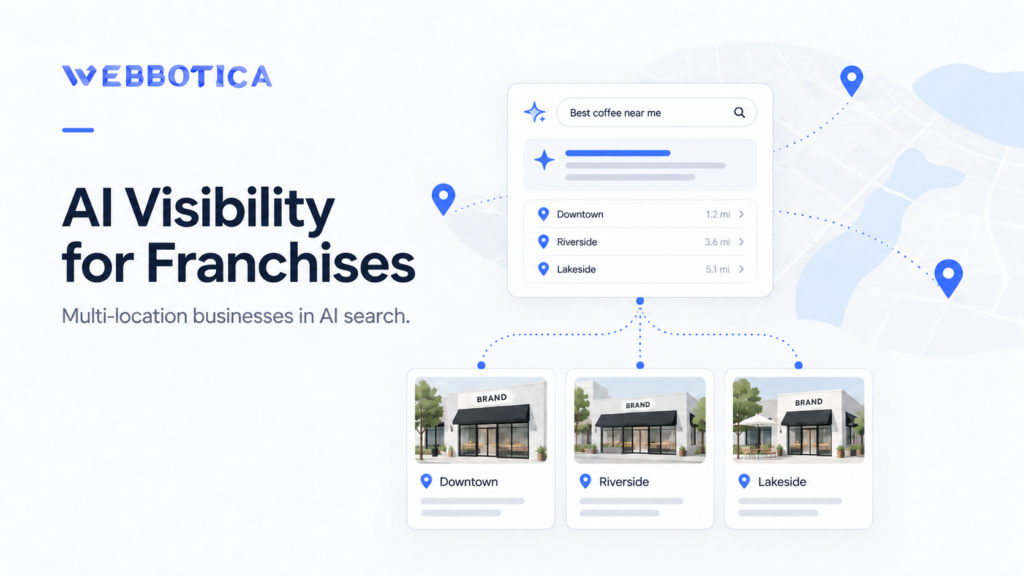
For businesses serving several locations, detailed website information can also clarify your service coverage.
Read our guide to creating useful service-area pages before building separate pages for every suburb.
6. Make Your Website Easy to Navigate and Understand
Search optimisation isn’t just about written content.
A customer might land directly on an individual service page without visiting your homepage first.
That page should be useful on its own.
Check whether it has a descriptive title, logical headings, readable text, useful internal links and an obvious next step.
Important service information should not exist only inside an image, video or animation.
Make sure the mobile version is easy to read and the contact form or phone button works properly.
For basic technical performance, use Google PageSpeed Insights.
Do you need special schema for AI search?
No.
Google does not require special AI structured data to appear in AI Overviews or AI Mode.
Standard structured data can still be useful for conventional SEO when correctly implemented.
For example, an appropriate LocalBusiness or Organization schema can describe relevant business information, while BlogPosting schema can describe an article’s author, title and publication date.
Structured data should match the content people can actually see.
Similarly, Google’s guidance confirms that an llms.txt file is not required for its search features.
Don’t spend your budget on unsupported AI optimisation shortcuts while basic usability and content problems remain unresolved.
7. Check Whether Your AI Search Visibility Is Improving
Once your website’s foundations are in place, you need a way to measure what happens.
There’s no universal AI ranking position that tells you whether a business is visible everywhere.
Different platforms can retrieve different sources and produce different answers.
Fortunately, you can begin measuring visibility without paying for an expensive subscription.
Google Search Console: Check AI Search Impressions
In June 2026, Google introduced dedicated generative AI performance reports, completing their worldwide rollout by August 31, 2026.
These reports show impressions from supported AI features, including Google AI Overviews and AI Mode.
You can examine which pages appeared, along with changes by date, country and device.
If your property doesn’t show the report, Google says it may not have enough impressions from those features.
An impression does not mean somebody visited your website or became a customer.
See Google’s Generative AI performance report documentation.
Bing Webmaster Tools: Check AI Citations
Microsoft’s AI Performance report provides citation information from supported AI experiences, including Microsoft Copilot and Bing.
It can help you understand which URLs were cited and which general retrieval topics were associated with those citations.
A citation is not a ranking position or website visit.
Visit Bing Webmaster Tools to explore the available reporting for your verified site.
Google Analytics: Check Visits From AI Assistants
Google Analytics 4 introduced an AI Assistant traffic channel in May 2026.
It helps identify attributable visits from supported AI assistants such as ChatGPT and Copilot.
You can examine this traffic alongside enquiries and other tracked conversions.
Google AI Overviews and AI Mode are treated separately from the AI Assistant channel.
The most useful question is not simply whether AI tools mention your business, but whether relevant visibility eventually helps generate genuine enquiries.
A Free Manual AI Visibility Check
You can also test relevant searches directly.
For example, a commercial cleaner might search:
“Find commercial cleaners offering evening office cleaning in Liverpool, NSW. Include links to their websites.”
Repeat the test using a few genuine customer questions across platforms with web search enabled.
Record the platform, exact question, date, whether your business appeared and which sources were linked.
Run the same tests later to look for changes.
Don’t mistake one answer for a permanent ranking. Results can vary with search context, location, timing and available sources.
For a complete tracking method, read our AI search visibility measurement guide.
Your AI Search Optimisation Checklist
If you have limited time, start with these seven checks.
| Check | What success looks like |
|---|---|
| Search accessibility | Important pages are indexable and not unintentionally blocked |
| Business clarity | Visitors can immediately identify your services and operating area |
| Service information | Key service pages answer important buying questions |
| Original evidence | Your website includes genuine experience, projects or useful insights |
| Local information | Your business details and eligible public profiles are accurate |
| Website usability | Content is readable, mobile-friendly and easy to navigate |
| Measurement | You have a baseline for search visibility, AI appearances and enquiries |
Don’t attempt to implement every possible technique at once.
Begin with one important service page. Improve its information, check technical accessibility and establish a baseline.
Then apply what you’ve learned to the rest of your website.
Does AI Search Optimisation Guarantee More Customers?
No.
Neither Google nor OpenAI guarantees that a properly optimised website will be recommended, cited or shown for a particular search.
Results depend on relevance, competing sources, search systems, user context and other factors outside the business owner’s control.
There is also no universal timeframe for AI search optimisation results.
The sensible objective is to make your website more useful, accessible and credible while measuring whether the changes contribute to real business outcomes.
Final Thoughts
AI search is changing how people discover and compare businesses, but the fundamentals remain familiar.
Customers still need reliable information, relevant services, trustworthy evidence and an easy way to contact the right provider.
Start by making those details clear.
Then ensure search engines can access them and measure the results using reliable tools.
The best AI search strategy begins with a website that’s genuinely useful to the people you’re trying to reach.
Need Help Improving Your Website’s Search Visibility?
At Webbotica, we help Australian service businesses improve their websites, local search presence and online discoverability.
If you’re unsure which improvements matter most for your business, explore our AI Search Visibility services or contact Webbotica to discuss where to start.
READY FOR THE NEXT STEP?
Put the advice into practice.
If you want help improving how your business is found, trusted and contacted online, we can work out the right next step with you.
Start a Conversation