Can a Local Service Business Appear in ChatGPT Without Ranking #1 on Google?
A local service business does not need to rank #1 on Google to appear in ChatGPT. Here’s what OpenAI confirms, what SEO still influences, and what remains unknown.
A local service business does not need to rank #1 on Google to appear in ChatGPT. Here’s what OpenAI confirms, what SEO still influences, and what remains unknown.
Yes. A local service business can appear in ChatGPT without ranking #1 on Google.
OpenAI does not describe ChatGPT Search as a copy of Google’s organic rankings. Its current guidance says ChatGPT ranks search results using multiple factors intended to help people find relevant and reliable information, and that placement is not guaranteed. OpenAI also explains that ChatGPT may rewrite a user’s question into one or more targeted searches and can use third-party search providers when gathering information.
That means a number-one Google position is not a documented requirement for appearing in a ChatGPT answer.
But that does not mean Google rankings or traditional SEO are irrelevant. Search visibility, crawlability, useful content, trustworthy information and a clear local presence can all make a business easier for search and AI systems to discover and understand.
The simplest way to think about this is that Google organic ranking and ChatGPT visibility are related problems, but they are not the same output.
Google might rank ten local businesses for a search such as:
electrician Parramatta
A person using ChatGPT might instead ask:
Who are some electricians around Parramatta that do switchboard upgrades and have clear evidence they work on older homes?
Those are not identical information requests.
OpenAI says ChatGPT Search may rewrite a conversational prompt into one or more targeted searches. It can then run additional searches as it works out what information is needed. For local queries, ChatGPT can also use approximate or shared location information to improve relevance.
So the system is not necessarily asking one question, receiving Google’s first result and repeating it. It may be gathering information from several searches and sources before constructing an answer.
OpenAI’s current ChatGPT search documentation is explicit that search results are ranked using multiple factors for relevance and reliability, and that placement cannot be guaranteed.
This is another reason not to treat a Google #1 ranking as a prerequisite.
OpenAI says ChatGPT Search sometimes works with other search providers. Its current disclosure links to Microsoft and Shopify policies when explaining how search queries may be processed.
OpenAI does not publish a complete provider-by-provider formula for every search. So it would be wrong to claim that Google positions never matter, or that ChatGPT uses only one external search engine.
What we can safely say is narrower:
OpenAI does not state that a business must rank #1 on Google before it can appear in ChatGPT Search.
In fact, OpenAI’s publisher guidance says any public website can appear in ChatGPT search, provided it can be discovered and accessed appropriately.
This distinction matters for local businesses.
A business can be useful to an AI answer without occupying the top traditional blue-link position for every related query.
Microsoft’s Bing Webmaster team makes a similar distinction in its AI Performance reporting. Microsoft says AI citation activity shows how often pages are referenced in AI-generated answers, but those citation counts do not represent page ranking, authority or placement inside an individual answer.
That is useful evidence because it shows why AI visibility should not be reduced to one familiar SEO metric.
Yes. Very much.
The mistake would be jumping from “Google #1 is not required” to “Google and SEO no longer matter.”
ChatGPT still needs information it can discover, retrieve and evaluate. A local business with a technically poor website, vague service pages, inconsistent business details and almost no reliable information on the public web gives retrieval systems less to work with.
Traditional SEO helps with many of the same foundations:
Those activities can improve ordinary search performance. They can also make your business easier for AI-assisted search systems to discover and interpret.
Our broader guide on how to rank in ChatGPT and AI search goes deeper into those shared foundations.
OpenAI does not publish enough detail to give a formula, so this section needs to be treated as reasonable inference rather than a confirmed ranking checklist.
A business may still be relevant to a particular ChatGPT question because it has information that matches the user’s request more closely than a higher-ranking general result.
For example, imagine two plumbing businesses.
If the user’s question is specifically about emergency burst-pipe help in that suburb, Business B may provide more directly relevant evidence for that particular request.
That example does not prove ChatGPT will recommend Business B. It simply illustrates why conversational retrieval can evaluate a different slice of relevance from one broad Google keyword position.
If your goal is better visibility across both traditional and AI-assisted search, the practical priority is not “beat every competitor to #1 first.”
Make the business easy to discover, understand and verify.
Do not make one page vaguely say you “offer quality solutions.” Explain what you actually do, who it is for and what problems you solve.
For local queries, location matters. OpenAI confirms that ChatGPT can use location information to improve local results. Your website and business profiles should therefore make it easy to understand where you operate.
Your name, contact details, opening hours, service area and major business facts should not contradict each other across your website and public profiles.
This is also why your Google Business Profile can still matter for AI search, even though it is not a magic ChatGPT ranking switch.
A useful page about “how much does switchboard replacement cost in Sydney?” may answer a real customer question more effectively than another generic article called “Top 10 Electrical Tips.”
OpenAI recommends allowing OAI-SearchBot if you want site content to be discovered, surfaced, cited and linked in ChatGPT Search. Blocking discovery at the technical level can undermine everything else you do.
There is still a lot nobody outside OpenAI can state with confidence.
That uncertainty is important. Anyone claiming they know a guaranteed way to turn a Google position into a fixed ChatGPT ranking is going beyond the evidence currently available.
You do not need to wait until your business ranks #1 on Google before thinking about ChatGPT visibility.
Work on the shared foundations now: a crawlable website, accurate local information, clear service pages, useful content, credible public evidence and strong traditional search fundamentals.
If those improvements also move you higher in Google, that is valuable. But Google position should be treated as one signal of search visibility, not as a permission slip that determines whether ChatGPT is allowed to find or mention your business.
The evidence supports a more measured conclusion: ranking #1 on Google can be valuable, but it is not a documented prerequisite for appearing in ChatGPT.
READY FOR THE NEXT STEP?
If you want help improving how your business is found, trusted and contacted online, we can work out the right next step with you.
Start a Conversation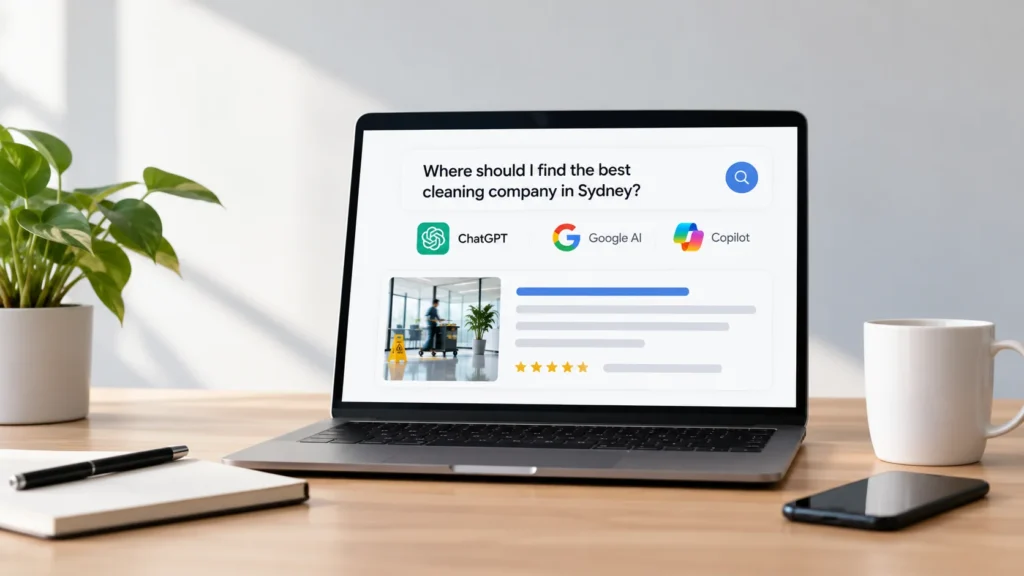
Can customers find your business when they search using ChatGPT, Google AI or Microsoft Copilot? If your website clearly explains your services,…
Read guide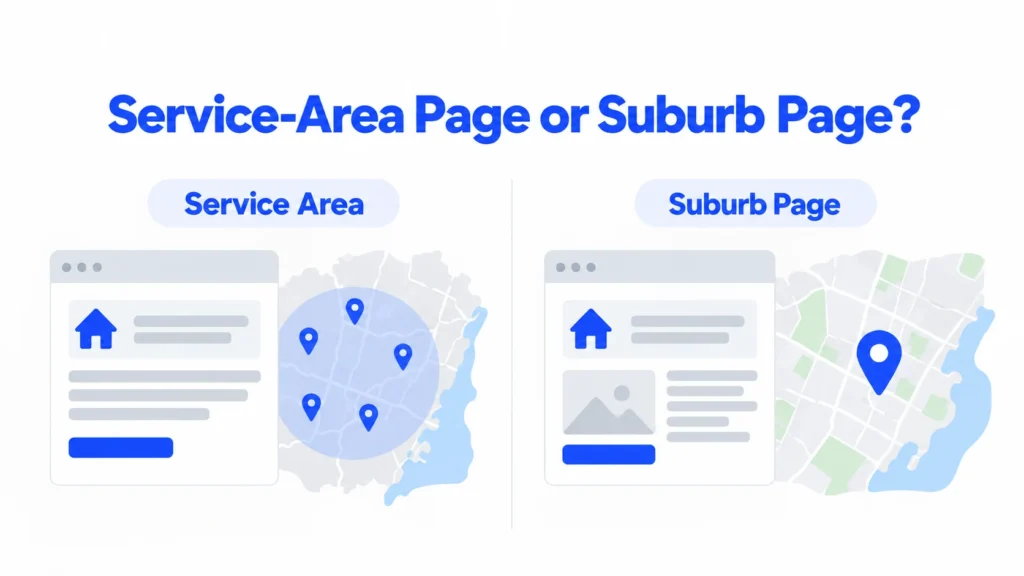
Learn when an Australian service business needs suburb pages, what useful location pages should include, and how to evaluate local SEO and…
Read guide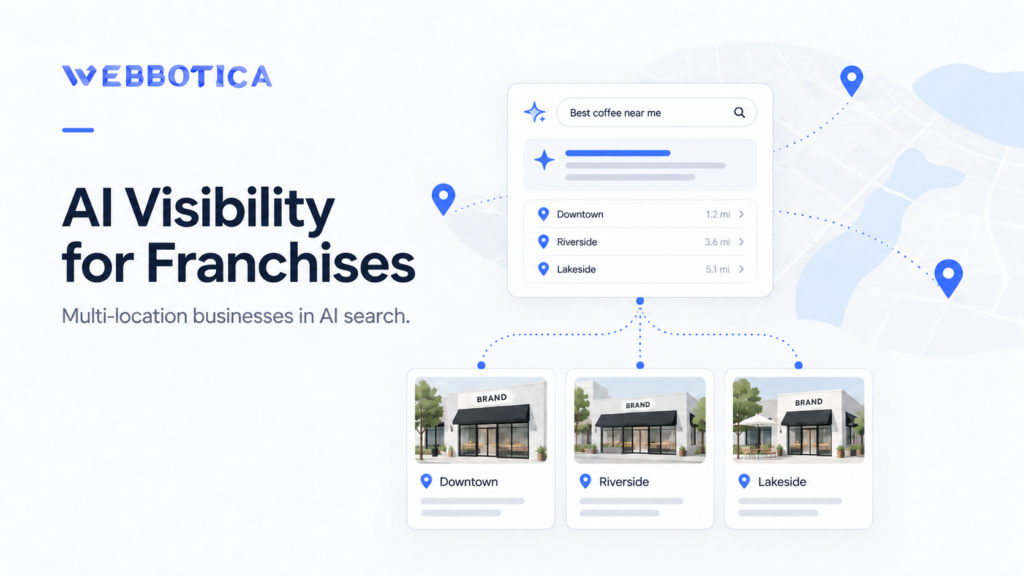
A practical guide for franchises and multi-location service businesses: build accurate branch pages, avoid fake location listings, and check AI search visibility…
Read guide