Can a New Local Business Website Appear in AI Search Before It Has Much Authority?
Can a new local business website appear in AI search before it has much authority? Yes — but eligibility is not the same as consistent citations or recommendations.
Can a new local business website appear in AI search before it has much authority? Yes — but eligibility is not the same as consistent citations or recommendations.
Yes. A new local business website can appear in AI search before it has built much authority.
There is no published OpenAI rule saying a website must reach a particular age, backlink count, Domain Authority score, Domain Rating score or Google position before it can appear in ChatGPT search. OpenAI says any public website can appear in ChatGPT search, while also making clear that placement is not guaranteed.
The more useful distinction is between being eligible to appear and being likely to be selected, cited or recommended. OpenAI does not publish an authority threshold that a site must cross before it can be eligible for ChatGPT search. A new site can therefore be publicly accessible without yet having the reputation or breadth of evidence that makes repeated retrieval more likely. No fixed timeline for crossing that gap is documented.
In SEO conversations, authority often gets reduced to third-party scores such as Domain Authority or Domain Rating. Those can be useful comparison metrics, but they are not the same thing as a published ranking rule from OpenAI.
For a local service business, a more practical way to think about authority is this:
How much reliable public evidence exists that this business is real, relevant to the question and worth trusting?
That evidence can come from many places over time: a clear website, consistent business information, useful service pages, legitimate mentions, links from relevant sites, customer reputation, accurate business profiles and a history of being discoverable across the web.
None of that creates a guaranteed “AI authority score”. The important point is that a new business does not need to wait for a third-party metric to become impressive before it starts making its website useful and discoverable.
For many new websites, the first obstacle is not authority. It is simply discovery.
OpenAI says that any public website can appear in ChatGPT search and recommends allowing OAI-SearchBot so site content can be discovered and included in summaries and snippets. Its current ChatGPT search guidance also says search results are ranked using multiple factors intended to help people find relevant, reliable information, and that placement is not guaranteed.
For a new local service business, that makes the technical basics disproportionately important. Before worrying about advanced “AI optimisation”, make sure important pages can actually be found and understood.
These are ordinary web and SEO foundations. They matter because an AI system cannot reliably use information it cannot discover, access or interpret.
A young website usually cannot manufacture years of reputation overnight. What it can do is be more specific, clearer and more useful.
Imagine two local electricians.
If someone asks an AI search tool a narrow question about switchboard upgrades in that service area, Business B has created a page that is much easier to match to that exact information need.
That does not prove the newer business will be cited. Established competitors may still have stronger overall signals, broader coverage and more third-party evidence. The point is simply that a new site can create useful, specific information before it has accumulated years of authority.
A new business can easily fall into the trap of trying to sound bigger than it is.
Claims such as “Sydney’s most trusted”, “the leading provider” or “number one” do not become credible just because they are repeated across a website. If they cannot be supported, they create more ambiguity rather than more trust.
Specific facts are more useful:
Google’s current people-first content guidance recommends creating content that genuinely helps an intended audience rather than producing material mainly to attract search traffic. That guidance applies to Google Search, not directly to ChatGPT. But as a content principle, it is still useful: a clear page that answers a real customer question is a stronger asset than generic content written only to chase an algorithm.
They can matter, but this is where claims often become too strong.
There is no public OpenAI documentation saying a new website needs a specific number of backlinks before it can appear in ChatGPT search. So it would be inaccurate to call backlinks a documented ChatGPT admission requirement.
They can still matter indirectly because legitimate links and mentions create public evidence around a business and may help discovery or verification. That is different from saying backlinks are a direct ChatGPT ranking factor. OpenAI does not publish a backlink requirement for ChatGPT search.
For a local service business, that means the sensible goal is not “get 100 backlinks”. It is to build normal, defensible web evidence through things such as relevant industry profiles, supplier relationships, local associations, genuine press or community mentions, useful content people choose to reference and accurate business listings.
That is slower than buying a score, but it is also more durable.
It would be a mistake to interpret “a new website can appear in AI search” as “traditional SEO no longer matters”.
OpenAI does not publish a complete ChatGPT search ranking formula. But many of the practical foundations that help ordinary search also help make a site easier to discover and understand:
For Webbotica’s broader view of those shared foundations, see our guide to ranking in ChatGPT and AI search.
OpenAI says publishers that allow OAI-SearchBot can track referral traffic from ChatGPT because referral URLs include utm_source=chatgpt.com. That can provide evidence of visits that actually arrived through ChatGPT search, although it is not a complete ranking report.
Microsoft has also added an AI Performance report in Bing Webmaster Tools. It shows which pages are cited across Microsoft Copilot, AI-generated summaries in Bing and select partner integrations, along with citation trends and grounding queries.
Microsoft is explicit about what those numbers do not mean: citation activity does not indicate a page’s ranking, authority, importance or placement within an individual answer.
That distinction is useful. Instead of asking, “Is my domain authority high enough for AI?”, a business can increasingly look for actual evidence that its pages are being discovered, cited or visited.
Being technically eligible does not remove the advantages of an established competitor.
An older business may have years of customer reviews, local mentions, links, branded searches, project evidence and content history. A new website cannot manufacture all of that credibly in its first month.
What it can do is avoid wasting those first months.
Instead of waiting for “authority” to arrive before publishing useful information, the business can build a strong foundation immediately. Every clear service page, accurate public profile, genuine review, relevant mention and useful piece of content adds to the evidence available about the business.
There is no public formula telling a new local business exactly how much authority is enough for ChatGPT or AI search.
That uncertainty matters. Anyone promising that a new domain will start appearing in AI answers after a fixed number of links, pages or days is going beyond the public evidence.
You do not need to wait for your website to become “authoritative” in an SEO tool before making it useful for AI search.
Start with the things you can control: make the site crawlable, clearly explain the business, create strong service pages, answer genuine customer questions, keep local information accurate and build real external evidence as the business grows.
Authority still helps. Reputation still helps. Traditional search visibility still helps. But none of the current primary evidence establishes a universal authority threshold that a new website must cross before it can appear in AI search.
The defensible conclusion is narrower: a new website can be eligible before it has substantial authority, but consistent visibility depends on building useful, discoverable and credible evidence over time.
READY FOR THE NEXT STEP?
If you want help improving how your business is found, trusted and contacted online, we can work out the right next step with you.
Start a ConversationA local service business does not need to rank #1 on Google to appear in ChatGPT. Here’s what OpenAI confirms, what SEO…
Read guide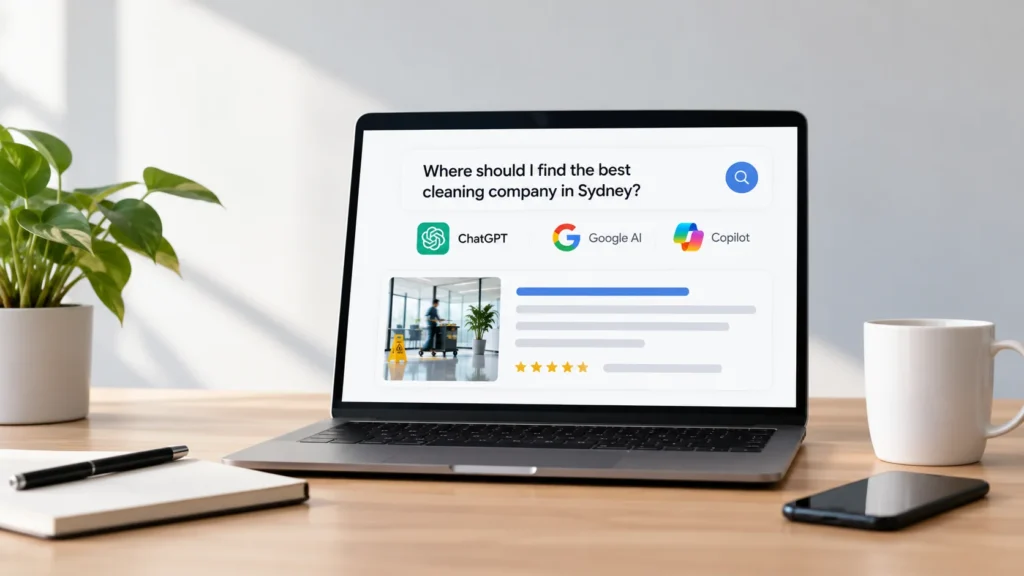
Can customers find your business when they search using ChatGPT, Google AI or Microsoft Copilot? If your website clearly explains your services,…
Read guide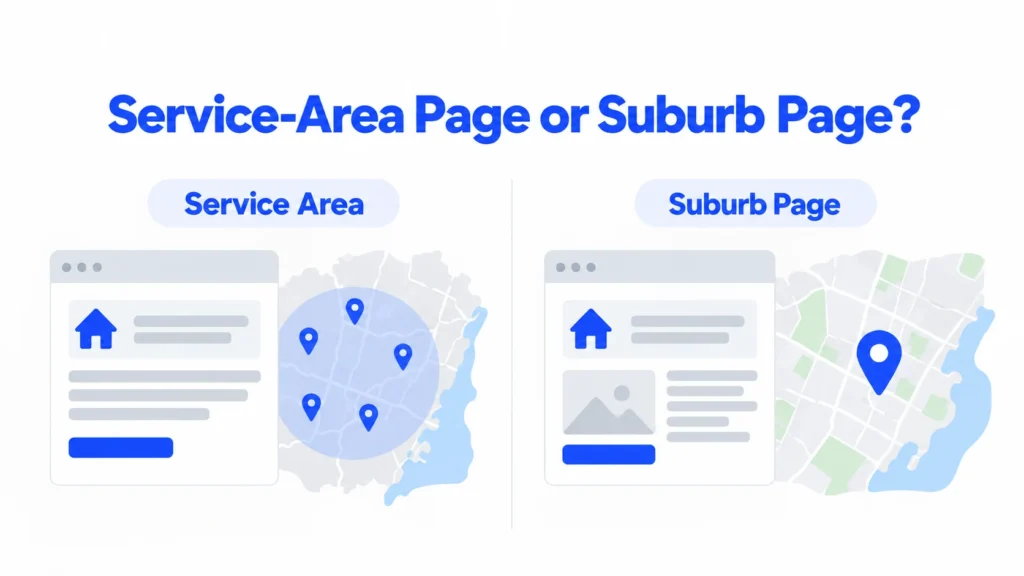
Learn when an Australian service business needs suburb pages, what useful location pages should include, and how to evaluate local SEO and…
Read guide