ChatGPT vs Google AI Overviews: what is different for a local service business?
A practical comparison of ChatGPT Search and Google AI Overviews for local service businesses, including eligibility, measurement and what to prioritise.
A practical comparison of ChatGPT Search and Google AI Overviews for local service businesses, including eligibility, measurement and what to prioritise.
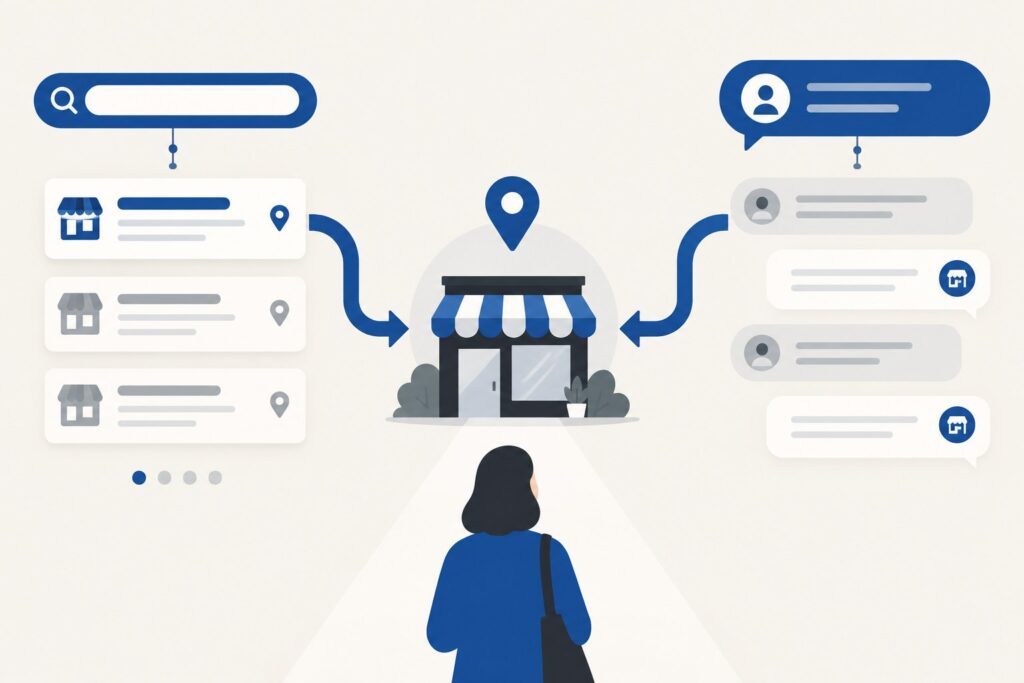
ChatGPT Search and Google AI Overviews can both put a service business in front of someone who is asking a question, but they are not the same search experience and they do not have identical eligibility rules.
For an Australian plumber, cleaner, electrician, landscaper or other local service business, the useful takeaway is not that you need two completely different “AI SEO” strategies. Most of the work still comes back to having a technically accessible website, clear information about what you do and where you do it, useful content, and accurate business information. The differences matter mainly when you think about how people discover you, what the platforms can access, and how you measure the result.
Google AI Overviews are a feature inside Google Search. They can appear above or alongside traditional search results when Google decides an AI-generated overview adds value to a query. The overview can contain supporting links that send users to websites.
ChatGPT Search is a conversational web-search experience. ChatGPT can search the web when a question would benefit from current information, and search-based answers can include citations and links to sources. OpenAI also says ChatGPT Search can use location information for local results and, in some cases, rewrites a user’s question into one or more targeted searches sent to search providers.
That creates a different user journey. A person on Google may search something such as “how much does an emergency plumber cost in Sydney?” and receive an AI Overview as part of a broader search-results page. In ChatGPT, the same person might ask a longer conversational question, receive a synthesised answer, then ask follow-up questions without beginning a completely new search.
That example describes how the interfaces can be used; it does not mean either platform will necessarily show an AI answer, cite a particular business or use a particular source for that query.
This is one of the clearest documented differences.
Google states that there are no additional technical requirements for appearing as a supporting link in AI Overviews or AI Mode. A page needs to be indexed and eligible to appear in Google Search with a snippet, and Google’s existing Search policies and SEO fundamentals continue to apply.
Google also explicitly says there is no special schema markup or new machine-readable “AI” file required to appear in these features.
For a service business, that means ordinary search fundamentals still matter. Google recommends making sure crawling is allowed, important content is available as text, internal links make pages discoverable, structured data matches the visible page, and Business Profile information is current.
Meeting those requirements does not guarantee an AI Overview citation. Google is clear that crawling, indexing and serving content are not guaranteed, and AI Overviews only appear when its systems decide they add value beyond the normal search results.
ChatGPT Search is not simply a different presentation of a Google results page.
OpenAI says ChatGPT can automatically search the web when current information would help answer a question. Search responses may cite sources, and users can open those citations or a Sources panel to inspect the underlying pages.
OpenAI also documents a specific website-access requirement: to be eligible for inclusion in ChatGPT Search, a site should allow OAI-SearchBot to crawl it and ensure its hosting or content-delivery network permits traffic from OpenAI’s published searchbot IP addresses. OpenAI says placement is not guaranteed.
That is operationally different from Google’s requirement that a page be indexed and snippet-eligible in Google Search for supporting-link eligibility in Google’s AI features.
For a business owner, the practical check is straightforward: do not accidentally block the crawlers used by the platforms where you want your public website to be discoverable. That is an eligibility step, not a ranking trick.
Both platforms can go beyond a single literal keyword, but the companies describe this in different ways.
Google says AI Overviews and AI Mode may use a technique it calls query fan-out, issuing multiple related searches across subtopics and data sources to build a response and identify supporting pages.
OpenAI says ChatGPT Search sometimes rewrites a user’s question into one or more targeted queries that it sends to search providers.
For a local service business, this is another reason not to build pages around awkward repetitions of one exact keyword. A useful page should make the subject unambiguous: what service is being discussed, who it is for, where relevant, what the customer needs to know, and what limitations or choices affect the answer.
It would go too far, however, to turn these documented query-expansion behaviours into a formula for ranking. Neither company’s documentation establishes that adding a particular heading, FAQ count or phrase will cause an AI system to cite your business.
Google’s own guidance for AI features tells site owners to keep their Business Profile information up to date. That makes sense because AI Overviews sit within the broader Google Search ecosystem.
OpenAI’s current ChatGPT Search documentation says location information can be used to provide relevant local results. It does not, however, establish a simple equivalent rule such as “optimise this one business profile and you will rank in ChatGPT”.
So an Australian service business should maintain its Google Business Profile for Google visibility, while also making sure its public web presence clearly and consistently explains the business itself: services, service areas, contact information, qualifications or relevant trust information, and genuinely useful answers to customer questions.
That is a defensible visibility strategy. Claiming that any one of those elements is a direct ChatGPT ranking factor would not be.
Very little should be changed just because AI search exists.
A sensible service-business website should make these things easy for both people and search systems to understand:
These are not secret AI optimisation tactics. They make the site more useful to prospective customers while also giving search systems clearer public information to work with.
Usually, no.
If a page genuinely answers a customer question well, there is little reason to create a second near-duplicate page labelled “for ChatGPT” or “for AI Overviews”. Google’s guidance specifically says no special optimisation is required for its AI features, while OpenAI does not publish a special content template that guarantees ChatGPT Search placement.
Instead, decide whether a topic deserves a page based on customer intent.
For example, if customers repeatedly need to understand the difference between a basic clean and an end-of-lease clean, a cleaning company may have a legitimate reason to publish a clear comparison. If customers want to know whether a blocked drain requires immediate attention, a plumber can explain the warning signs and when professional help is appropriate.
The page should exist because it helps a real prospective customer make a decision, not because an “AEO checklist” says every business needs 50 question pages.
If you want a broader framework for tracking results across platforms, see how to measure AI search visibility for a local business.
Google now provides a dedicated Generative AI performance report in Search Console for eligible properties. Google says it includes impressions from AI Overviews and AI Mode and can break those impressions down by page, country, date and device. The underlying data is also included in the Web search type of the standard Performance report. The dedicated report is useful for measuring whether links from your site are being shown in Google’s generative search features, but it is still Google-specific and does not measure ChatGPT visibility.
ChatGPT referrals can be identified in a site’s analytics when a user clicks through from ChatGPT Search: OpenAI says referral URLs automatically include utm_source=chatgpt.com. Referral traffic still tells you only about visits that reached your website. It does not reveal every time your business was mentioned, considered or displayed inside an answer.
For either platform, website traffic should therefore be connected to business outcomes. Track enquiries, calls, bookings or qualified leads alongside search visibility rather than treating an AI citation as the end goal.
If time and budget are limited, use one shared priority list rather than building separate “Google AI” and “ChatGPT” projects:
Google AI Overviews are an AI layer within Google Search, while ChatGPT Search is a conversational search experience with its own web-access and source-selection process.
For a local service business, that difference is worth understanding, but it should not distract from the larger overlap. Make your website accessible, useful and specific. Keep your business information accurate. Answer the questions real customers ask. Then make sure both Google and other relevant search systems can access the public information you want them to find.
That approach will not guarantee an AI citation—and no credible strategy should promise one—but it gives the business a stronger foundation for traditional search, AI-assisted discovery and, most importantly, customers trying to make a decision.
READY FOR THE NEXT STEP?
If you want help improving how your business is found, trusted and contacted online, we can work out the right next step with you.
Start a ConversationA local service business does not need to rank #1 on Google to appear in ChatGPT. Here’s what OpenAI confirms, what SEO…
Read guide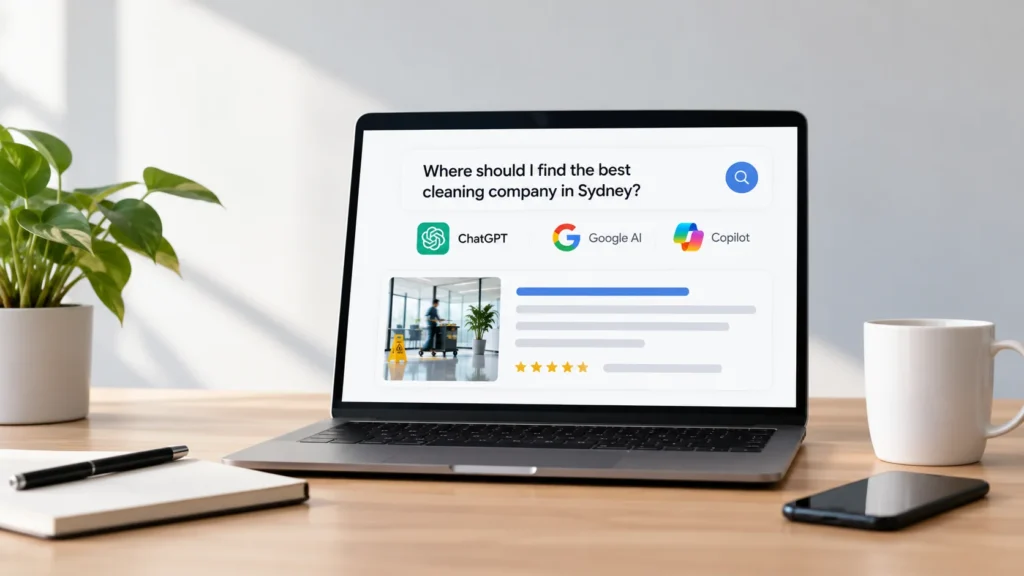
Can customers find your business when they search using ChatGPT, Google AI or Microsoft Copilot? If your website clearly explains your services,…
Read guide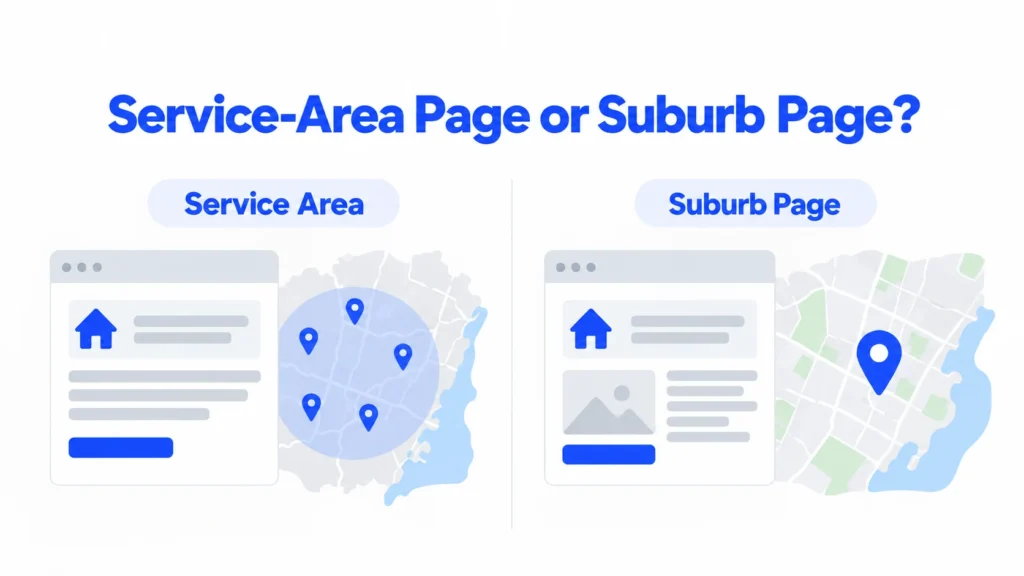
Learn when an Australian service business needs suburb pages, what useful location pages should include, and how to evaluate local SEO and…
Read guide